
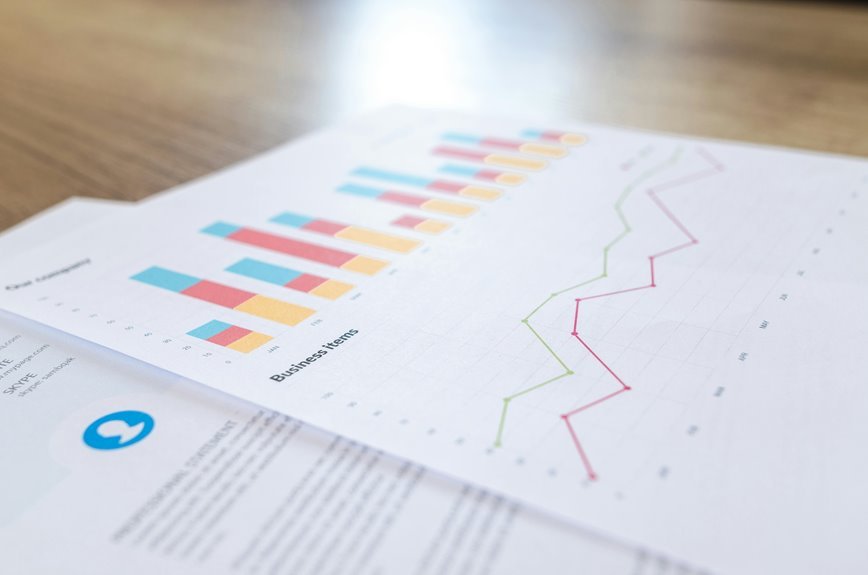
Tracking Performance and Trends: 18554891010, 864554534, 40810700, 120907485, 671917495, 6518331
Tracking performance and trends through key metrics such as 18554891010 and 864554534 provides organizations with critical insights. These numbers represent more than just data points; they reflect operational strengths and weaknesses. Analyzing these metrics allows businesses to make informed strategic adjustments. However, the real challenge lies in translating this information into actionable plans. Understanding how to leverage these insights could be the key to unlocking new growth opportunities.
Understanding Key Performance Indicators
How can organizations effectively measure their success? Understanding Key Performance Indicators (KPIs) is crucial.
Clear KPI definitions facilitate precise data visualization, allowing organizations to interpret performance effectively. Benchmark comparisons against industry standards enhance insights, revealing areas for improvement.
Recognizing the metric importance enables teams to focus on what truly drives success, fostering a culture of accountability and informed decision-making within the organization.
Analyzing Trends From Performance Metrics
Building on the established framework of Key Performance Indicators (KPIs), organizations can leverage performance metrics to identify and analyze trends over time.
Through rigorous trend analysis, they can extract valuable performance insights that highlight strengths and weaknesses.
This process enables businesses to adapt strategies, optimize resources, and foster innovation, ultimately empowering them to navigate changes and seize opportunities in a dynamic environment.
Leveraging Data for Strategic Planning
As organizations increasingly recognize the value of data in decision-making, they can leverage comprehensive datasets to inform strategic planning.
Utilizing data visualization techniques enhances comprehension, making complex information accessible.
Concurrently, predictive analytics applications enable foresight into market trends and consumer behavior, empowering leaders to formulate proactive strategies.
This synergy of insights fosters a culture of informed, data-driven decision-making, promoting organizational growth and adaptability.
Making Informed Decisions for Growth
While many organizations grapple with uncertainties in a rapidly changing market, making informed decisions becomes crucial for sustained growth.
Effective growth strategies rely on accurate data visualization, enabling leaders to identify trends and opportunities.
Conclusion
In conclusion, the meticulous analysis of performance metrics acts as a compass, guiding organizations through the complexities of the market landscape. By harnessing these key indicators, businesses can illuminate their pathways to success, revealing strengths to capitalize on and weaknesses to address. This data-driven approach not only enhances strategic planning but also cultivates a culture of informed decision-making, ultimately propelling growth and fostering resilience in an ever-evolving environment.